

Akoya vs South Sea Pearls
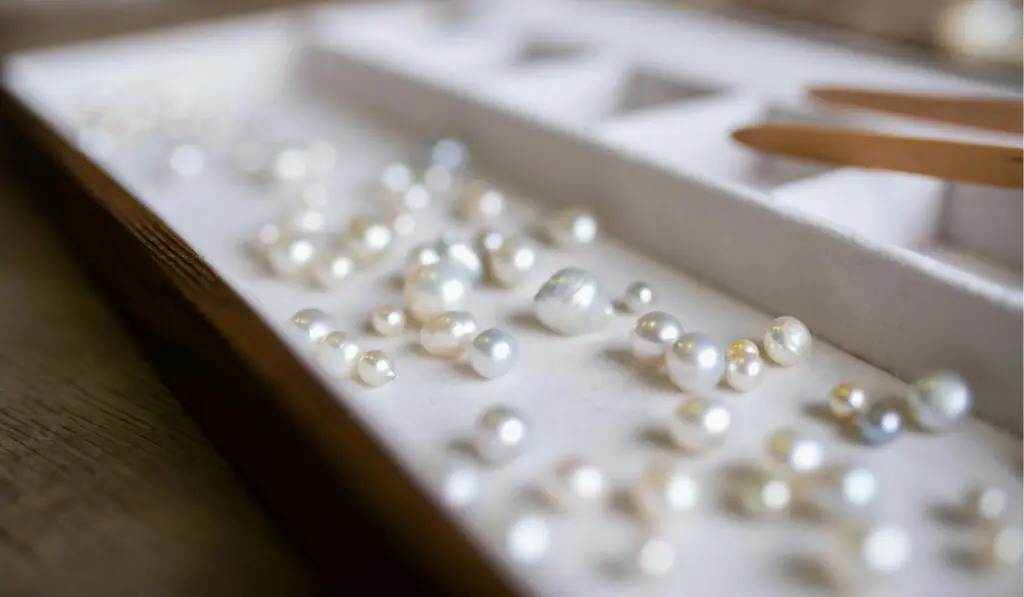
Wondering what the difference between South Sea pearls and Akoya pearls is? Although, both are Saltwater pearls – they are produced by two different species of pearl shell that are cultivated in different environments: Our Cygnet Bay Pearl Farm and our Broken Bay Pearl Farm. Read on to discover the differences between our two Saltwater pearls:
AKOYA PEARLS VS. SOUTH SEA PEARLS
FAQs
- PEARLS
- SPECIES
- PEARL TYPE
- FARM LOCATION
- TYPICAL COLOURS
- TYPICAL SHAPE
- TYPICAL SIZE RANGE
- FEATURE
- AKOYA PEARLS
- Pinctada fucata
- Australian Akoya
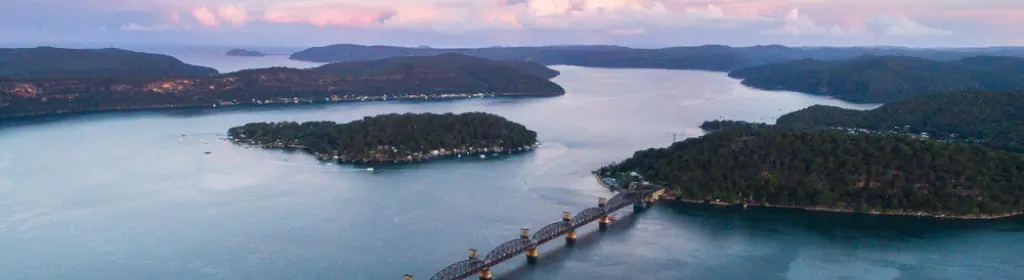
- Broken Bay Pearl Farm
- White, silver, cream, gold
- Round, button, drop, and baroque
- 4mm - 8mm
- Used by Mikimoto in Japan for over 120 years to create the original pearl.
- SOUTH SEA PEARLS
- Pinctada maxima
- Australian South Sea
- Cygnet Bay Pearl Farm
- White, silver
- Round, button, drop, and baroque
- 9mm - 16mm
- The world's largest pearl shell and the main source of Mother of Pearl buttons.
What are Akoya Pearls?
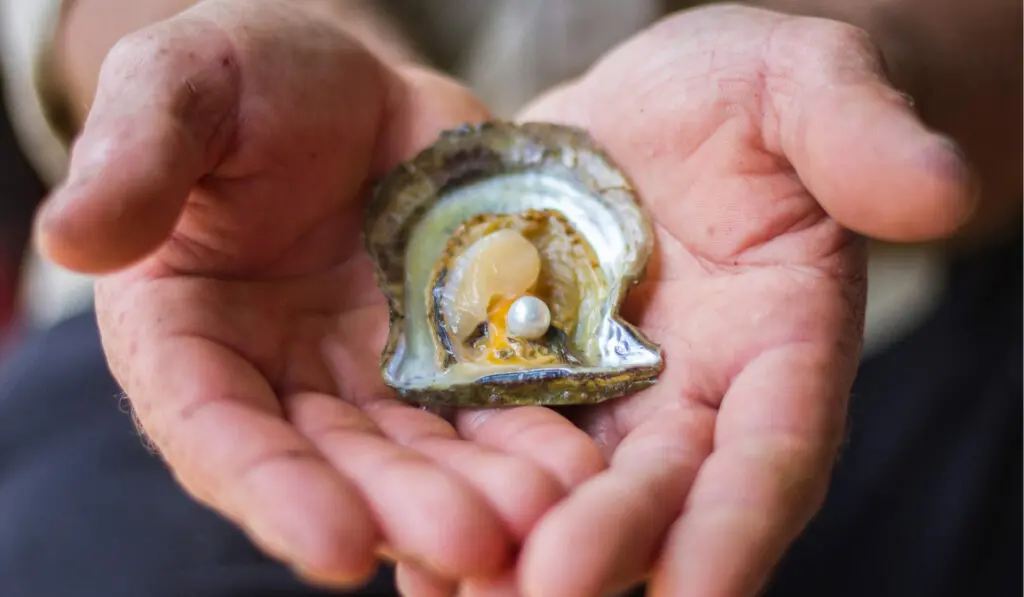
An Akoya pearl is a type of saltwater pearl that comes from the Pinctada fucata. These pearl shells are mainly found in the colder waters off the coast of Japan, as well as Vietnam, Korea and Australia. Our Akoya pearls are cultivated in NSW, at our Broken Bay Pearl Farm. As the Akoya shell is much smaller than the Pinctada maxima and is actually the smallest of all of the pearl-producing molluscs, this is one of the reasons Akoya pearls are generally smaller than South Sea pearls, with most Akoya pearls measuring between two and eight millimetres. The colour of Akoya pearls can vary, so while most people think of white pearls when they think of Akoya pearls, there are many other colours to choose from. This is because the colour of an Akoya pearl is determined by the environment and the diet of the oyster. Some of the different colours that Akoya pearls can include are white, cream, blue, and pink.
Akoya pearls are Saltwater pearls. While their freshwater cousins average a whopping 20-50 pearls in a single culturing cycle, it would be a rare occasion for an Akoya pearl shell to produce more than two. They are cultivated in colder saltwater bodies of water, unlike freshwater pearls that are are grown and harvested in bodies of freshwater.
There are a few things you can do to determine if a pearl is real or not. The first thing you can do is look at the surface of the pearl. A real pearl is more likely to have surface irregularities, unless it’s very expensive, while a fake pearl often has a perfect surface. This means fake pearls will feel much smoother to the touch than real pearls, which have a gritty texture. You can also apply the tooth test to check for grittiness. This involves rubbing the pearl lightly against the front of your tooth. Remember not to rub the pearl against the side of your tooth, as this may scratch the pearl. Again, you’re looking for a gritty texture, which you won’t get if the pearl is fake.
Black Akoya pearls are dyed. Both our Akoya pearls and Saltwater pearls are not chemically treated or enhanced in any way. Exactly as nature intended our pearls to be, is how we set them into jewellery in their purest form, direct from the ocean. In some countries, you may come across chemically treated or enhanced Akoya pearls, so it’s always a good idea to ask the question about the purity and provenance of your pearls before making a decision on your purchase. If you’re seeking a black pearl, the Pinctada margaritifera or Tahitian pearl shell produces black pearls and these pearls can be found in French Polynesia, the Cook Islands, and the Micronesian Islands.
Most pearl organisations use the same virtues or value factors to describe and classify pearls: shape, size, colour, surface and lustre. Grading systems have been developed to cater to specific pearl types and usually combine lustre and surface to reflect quality as shape, size and colour are considered highly subjective. The system we use here at Pearls of Australia ranges from B2 to A1 with B2 being the lowest quality and A1 being the highest quality. The other popular way to grade pearls is on a scale from A to AAA with A being the lowest quality and AAA being the highest quality. The factors that are considered when grading pearls are size, shape, colour, lustre, surface quality, and nacre thickness, although this last factor is usually only taken into account when evaluating pearls of the highest quality, and the process to do so often involves using x-ray technology or looking through the drill holes to see where the nucleus and nacre coating meet.
What are South Sea Pearls?
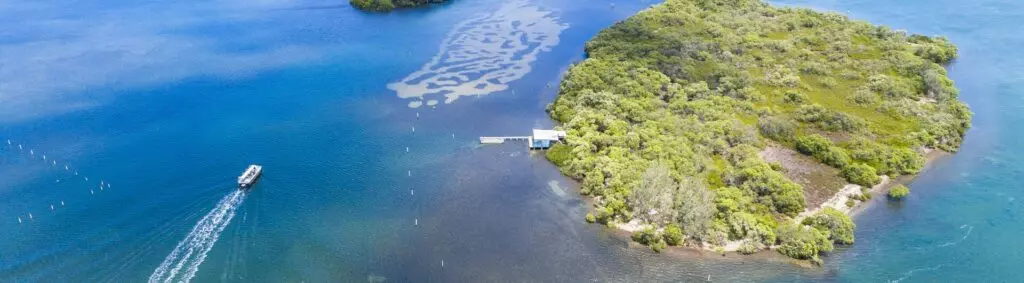
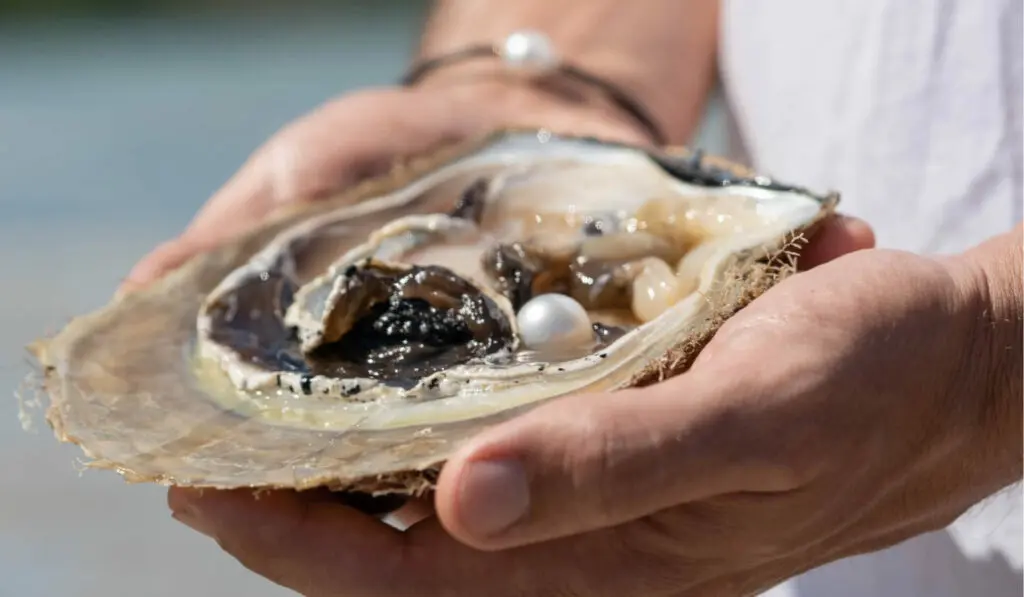
South Sea pearls are a type of saltwater pearl and are considered the rarest of all types of pearls. They come from the Pinctada maxima shell, where the name “South Sea” originates from the location of the shell, as these shells are found in the southern hemisphere – particularly around northern Australia, Indonesia, the Philippines, Burma and French Polynesia. Our South Sea pearls are sustainably cultivated in the pristine and remote waters of our Cygnet Bay Pearl Farm, located on the Kimberley Coast, WA.
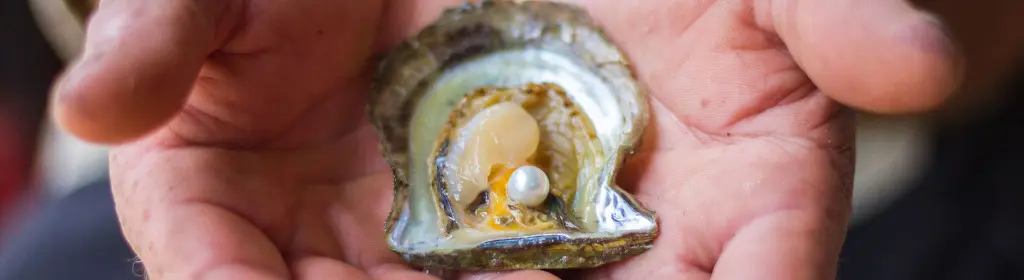
Our South Sea pearls are cultured. They are formed when a bead is harvested from a clam shell and a small piece of mantle tissue from a donor shell is carefully placed inside a South Sea pearl shell. This process is called “seeding” and is a surgical procedure that is carried out by an experienced technician. The small round bead becomes the nucleus of the pearl, and the pearl shell will coat the bead with pearly nacre, a substance secreted by the shell to protect itself. Over time this nacre builds up to form a pearl. Each South Sea pearl takes approximately 2-3 years to grow, and are cultivated at our Cygnet Bay Pearl Farm.
South Sea pearls are considered the rarest of all types of pearls. They come from the Pinctada maxima shell, where the name “South Sea” originates from the location of the shell, as these shells are found in the southern hemisphere – particularly around northern Australia, Indonesia, the Philippines, Burma and French Polynesia. Our South Sea pearls are sustainably cultivated in the pristine and remote waters of our Cygnet Bay Pearl Farm, located on the Kimberley Coast, WA.
There are a few things you can do to determine if a pearl is real or not. The first thing you can do is look at the surface of the pearl. A real pearl is more likely to have surface irregularities, unless it’s very expensive, while a fake pearl often has a perfect surface. This means fake pearls will feel much smoother to the touch than real pearls, which have a gritty texture. You can also apply the tooth test to check for grittiness. This involves rubbing the pearl lightly against the front of your tooth. Remember not to rub the pearl against the side of your tooth, as this may scratch the pearl. Again, you’re looking for a gritty texture, which you won’t get if the pearl is fake. The second thing you can do is look at the colour of the pearl. Fake pearls have a uniform colour, so if a pearl is real, what we’re looking for is a translucent overtone that could appear either green or pink over the main colour. Exceptional quality pearls may however have a uniform colour, so this factor should not be used in isolation.
The colour of any pearl is only one component of the grading system used to determine the quality of the pearl. The highest grades for colour are given to pearls with complete colour coverage and little differentiation in hue. Colour is also the most subjective aspect of the grading process, and only reveals its true nature when the pearl is applied on the skin of the wearer. It does influence price, and like all things related to gems, rarity and beauty will attract a higher value. Unlike many pearls on the global market, the colour of all Pearls of Australia pearls are natural and have not undergone any chemical enhancement. Most Australian South Sea pearls sit on the silver to white colour spectrum.
Akoya vs. South Sea Pearls. What’s right for me?
The decision between these two stunning and lustrous pearl types is up to you! Your personal preference on size, colour and shape will help you determine what’s right for you. We hope this guide helped you in your decision making process. If you’d like to see the size difference when wearing an Akoya pearl versus wearing a South Sea pearl, visit our size guide here to see the difference.